Pontet-Sorge: Construction of 3 Residential Buildings – Ecublens
Year
2020 - 2025
Owner of the project
TD promotion immobilière SA
Architects
Dolci architectes SA
Total cost
CHF ~37 million
THE CHALLENGE
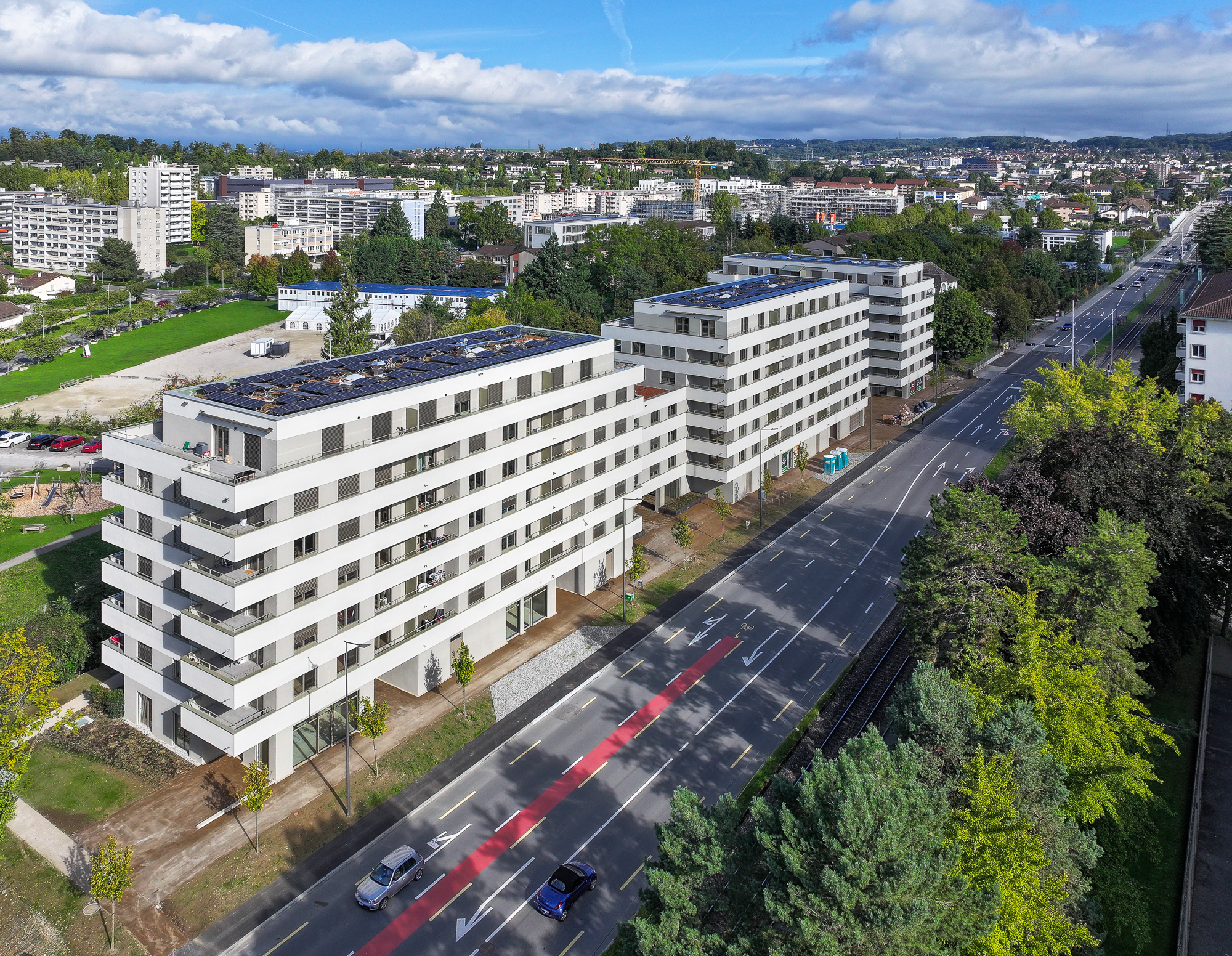
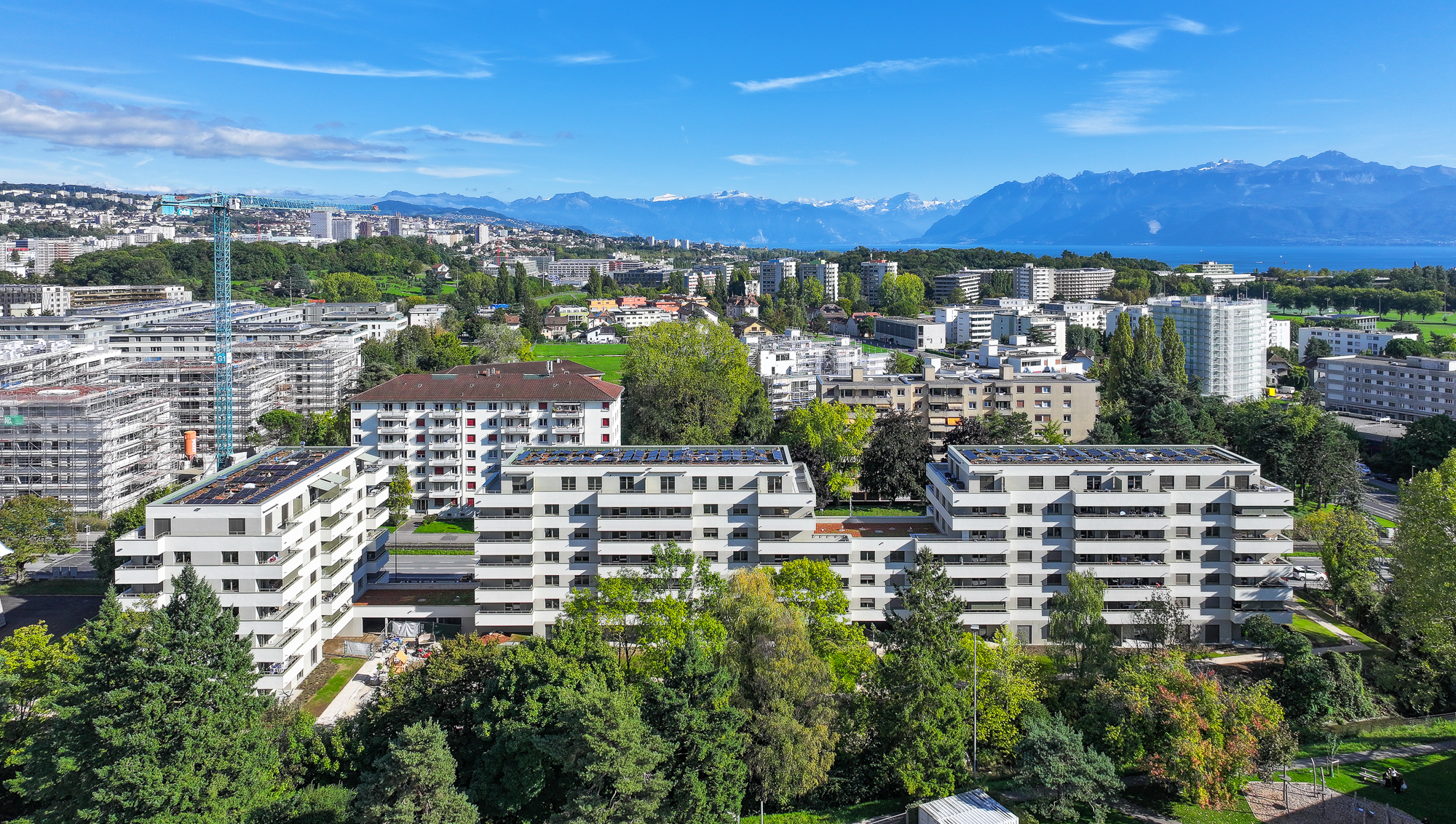
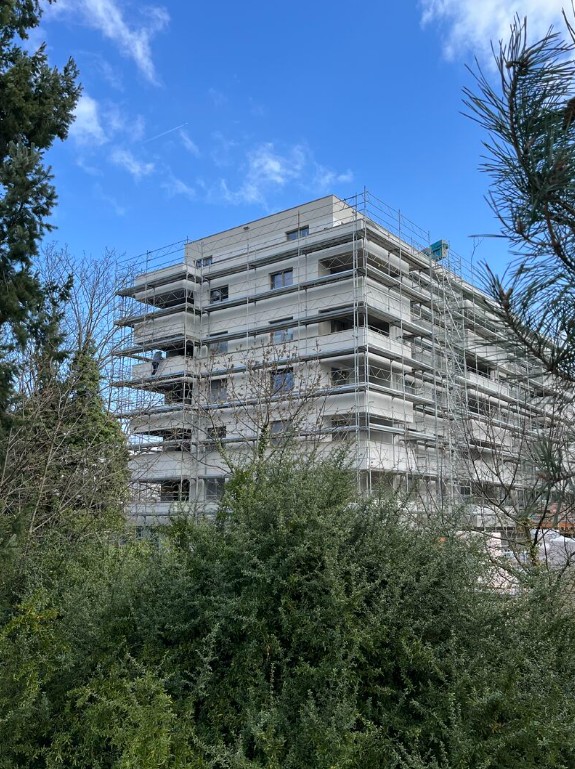
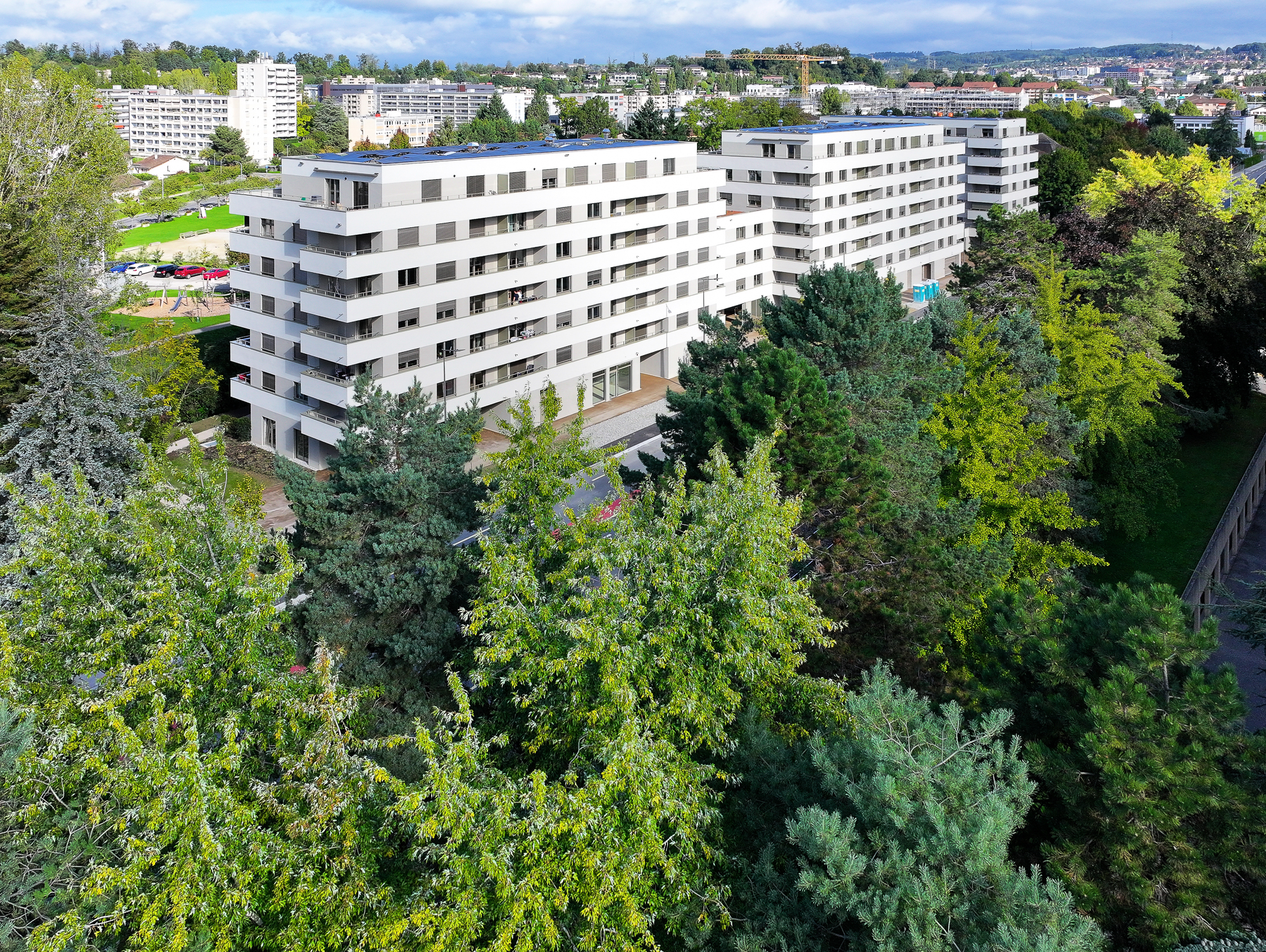
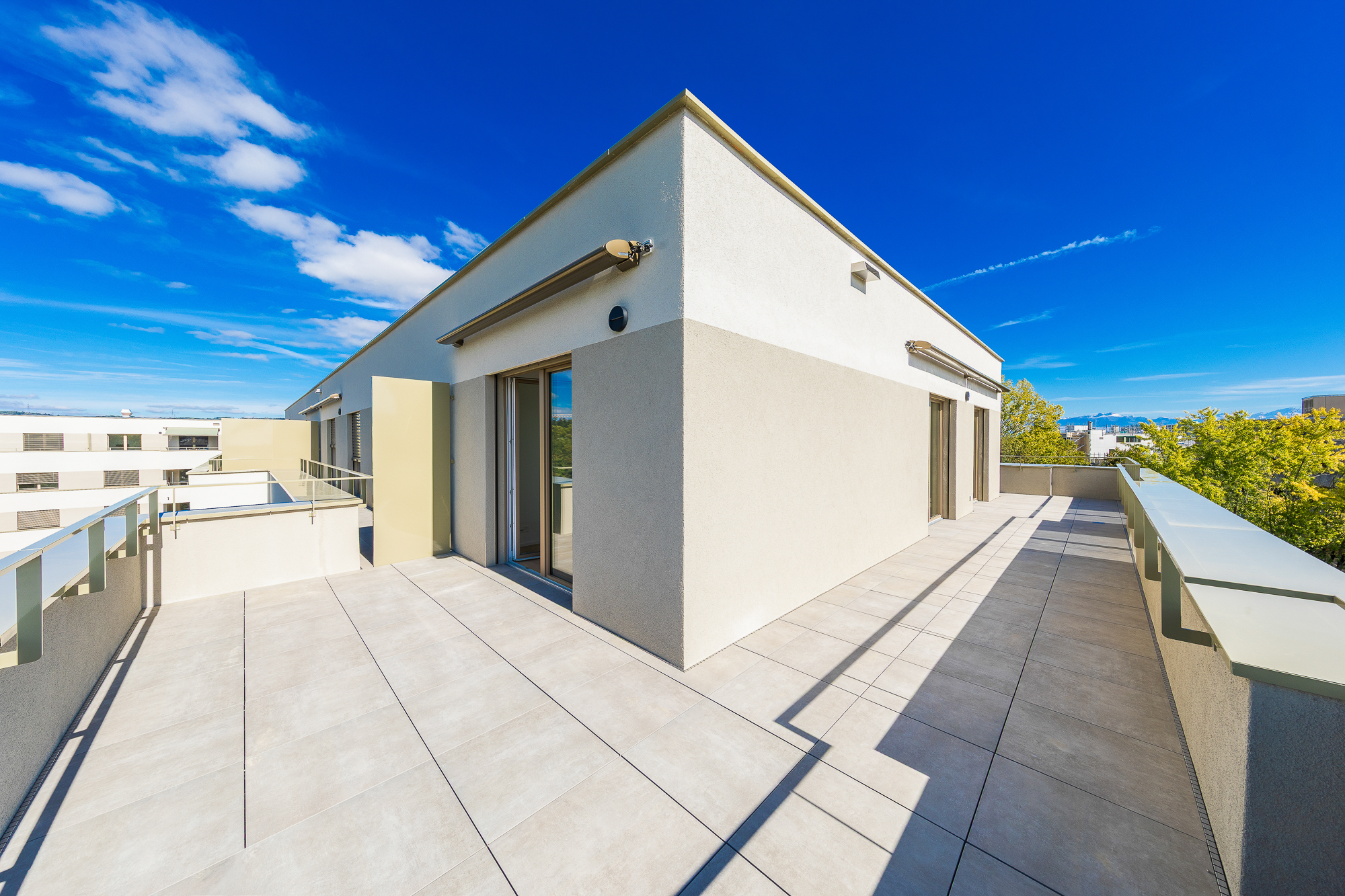
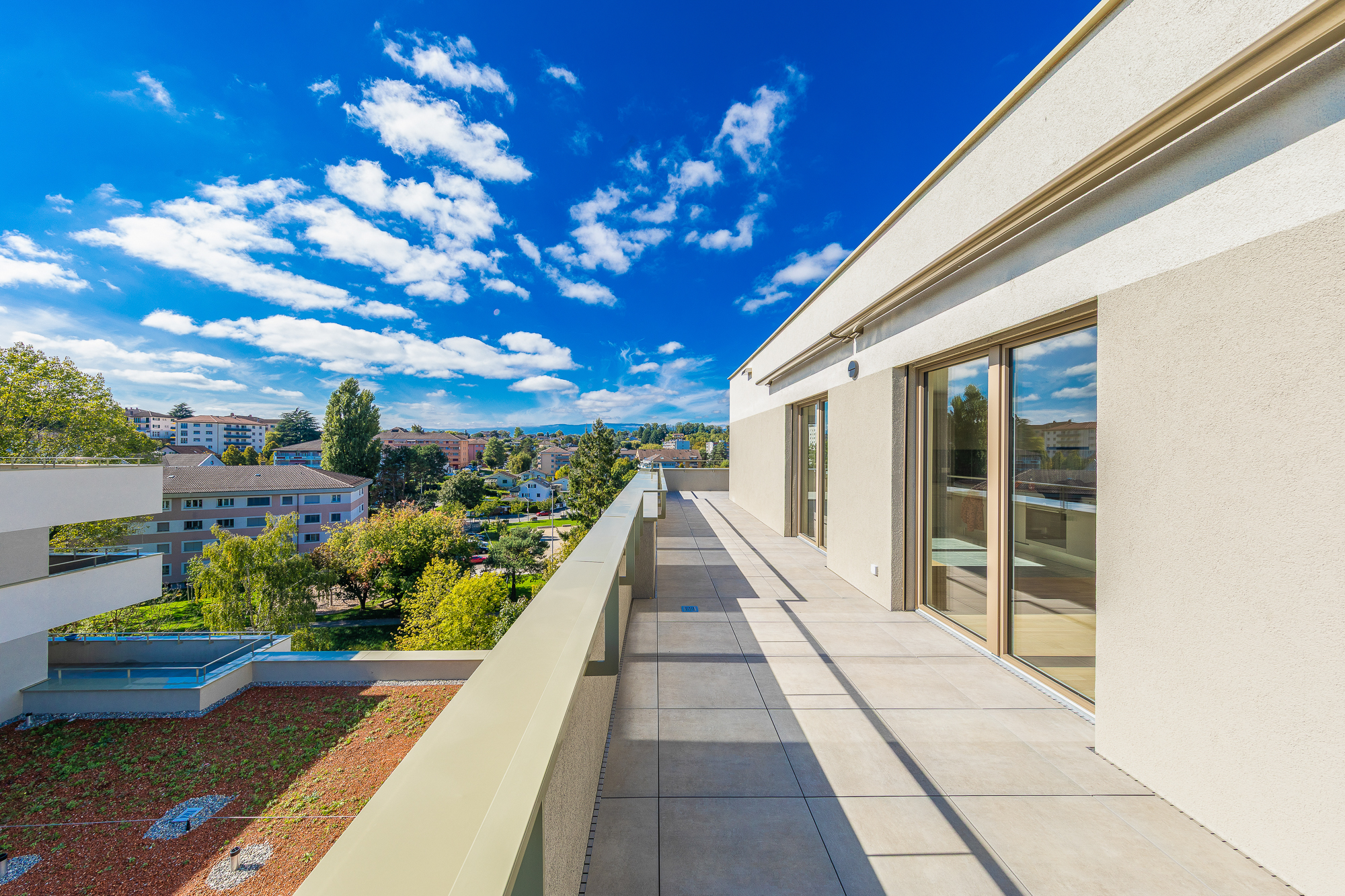
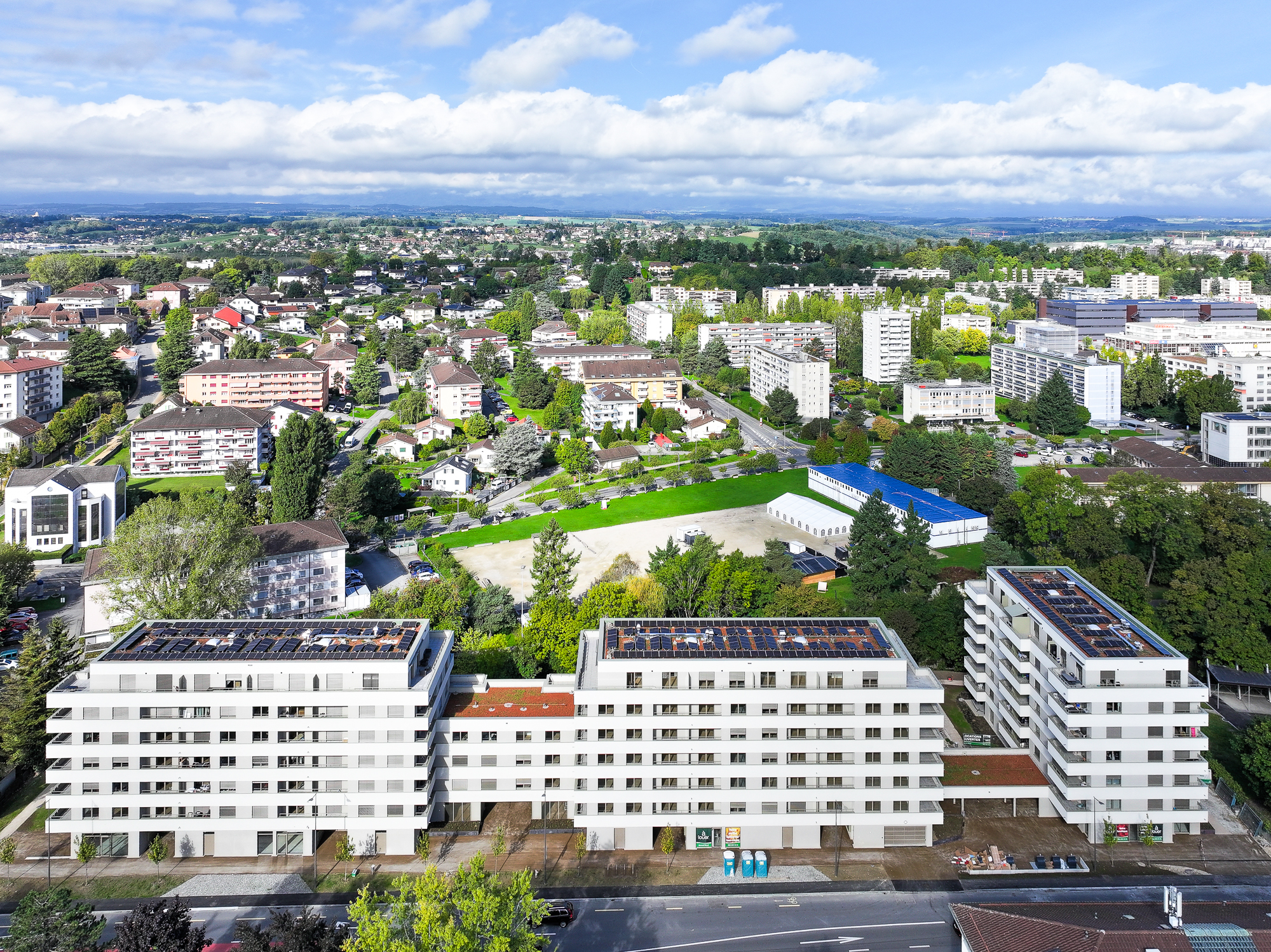
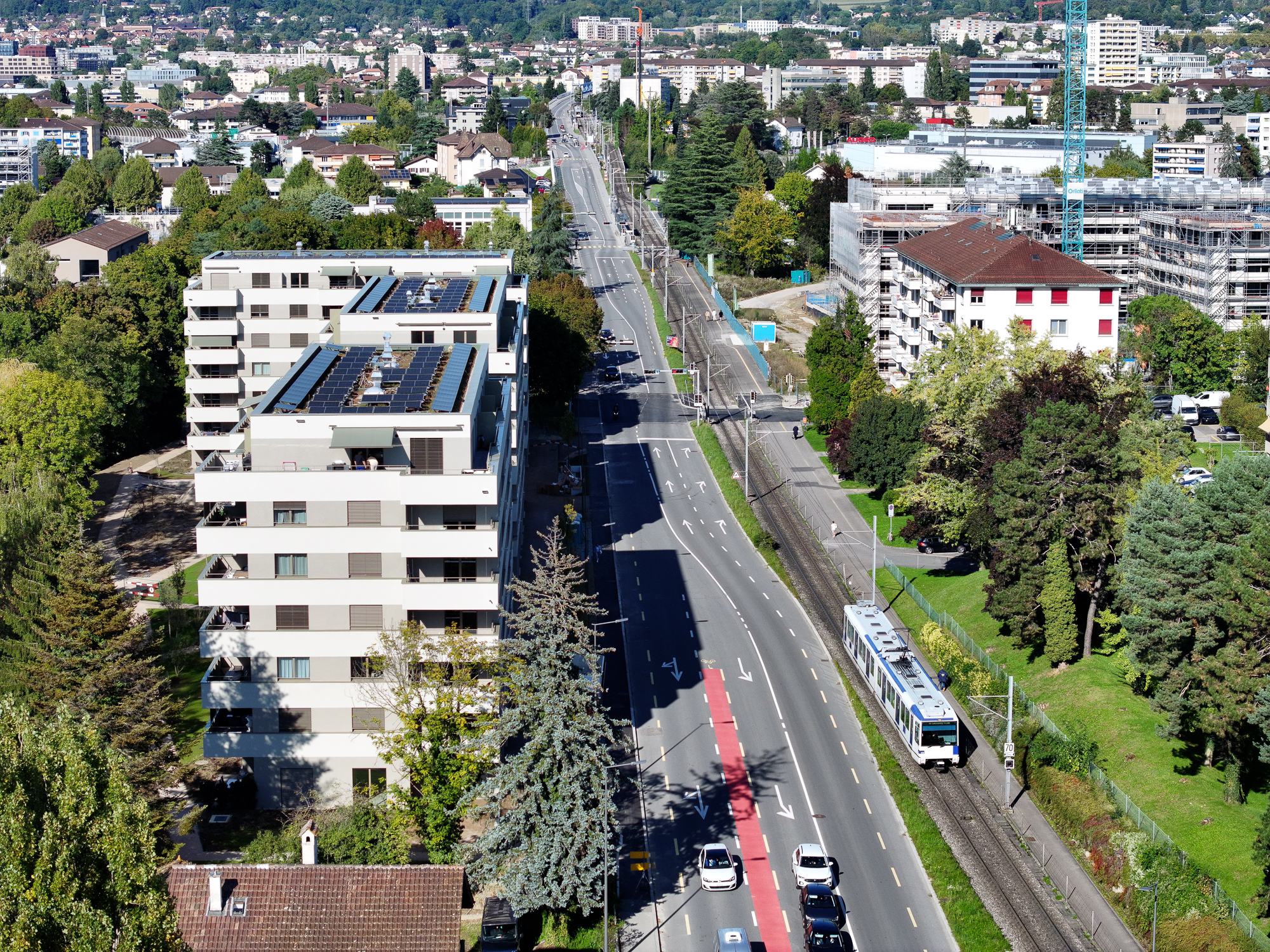
The project consists of the construction of three residential buildings totaling 117 housing units, incorporating commercial/activity spaces and a shared underground parking facility, within a new sustainable neighborhood in Pontet-Sorge, in Ecublens Its development took place in a technically demanding context. The presence of a residual flood risk, combined with a minimum elevation requirement above flood level for the ground floor, required an in-depth analysis of hydraulic conditions and rigorous control of elevations from the earliest design stages. Geotechnical conditions also required particular attention for the design of the foundations and the management of excavation works associated with the underground parking structure. The configuration of the project—composed of three distinct volumes resting on a partially unified infrastructure—required careful structural coordination in order to ensure coherent static behavior and control differential deformations. The integration of external utility networks, landscape works, and a footbridge crossing the Sorge further increased the complexity of the technical interfaces. The challenge was therefore to reconcile site constraints, regulatory requirements, and environmental ambitions within a reliable and durable structural solution.
OUR RESPONSE
Faced with the geotechnical, hydraulic, and regulatory constraints of the Pontet-Sorge site in Ecublens, our civil engineering approach consisted of developing a comprehensive and optimized solution integrating all the structural and environmental challenges of the project. The foundation concept is based on a raft foundation with local deepened areas supported by piles, ensuring the stability of the structure in this demanding soil context and in the presence of a residual flood risk. The excavation works were supported by retaining systems in the form of a retaining wall curtain, ensuring the safety of the excavations and controlling deformations near existing infrastructure. The reinforced concrete superstructure, designed in accordance with the applicable SIA standards, ensures efficient load transfer while meeting the high requirements for energy and acoustic performance. Particular attention was also given to structural optimization and to reducing the environmental footprint, notably through the use of recycled concrete and precise dimensioning of structural volumes. This approach made it possible to reconcile structural safety, durability, and construction efficiency.
Bernard Nicod