Caschlatsch Tower: experimental timber structure
Year
2024
Owner of the project
Gemeinde Disentis/Mustér
Architects
Studio UH Architects ETH SIA
The challenge
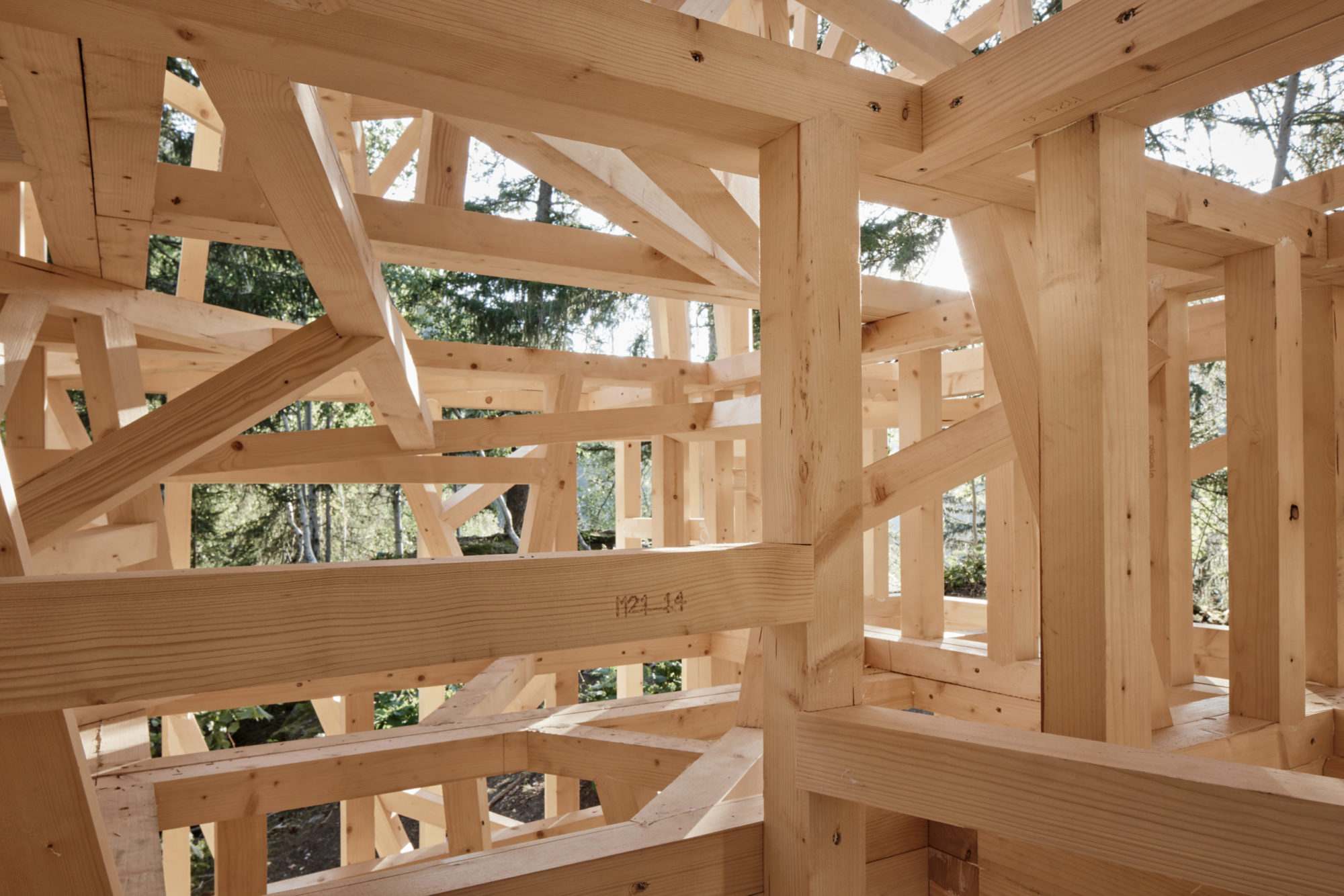
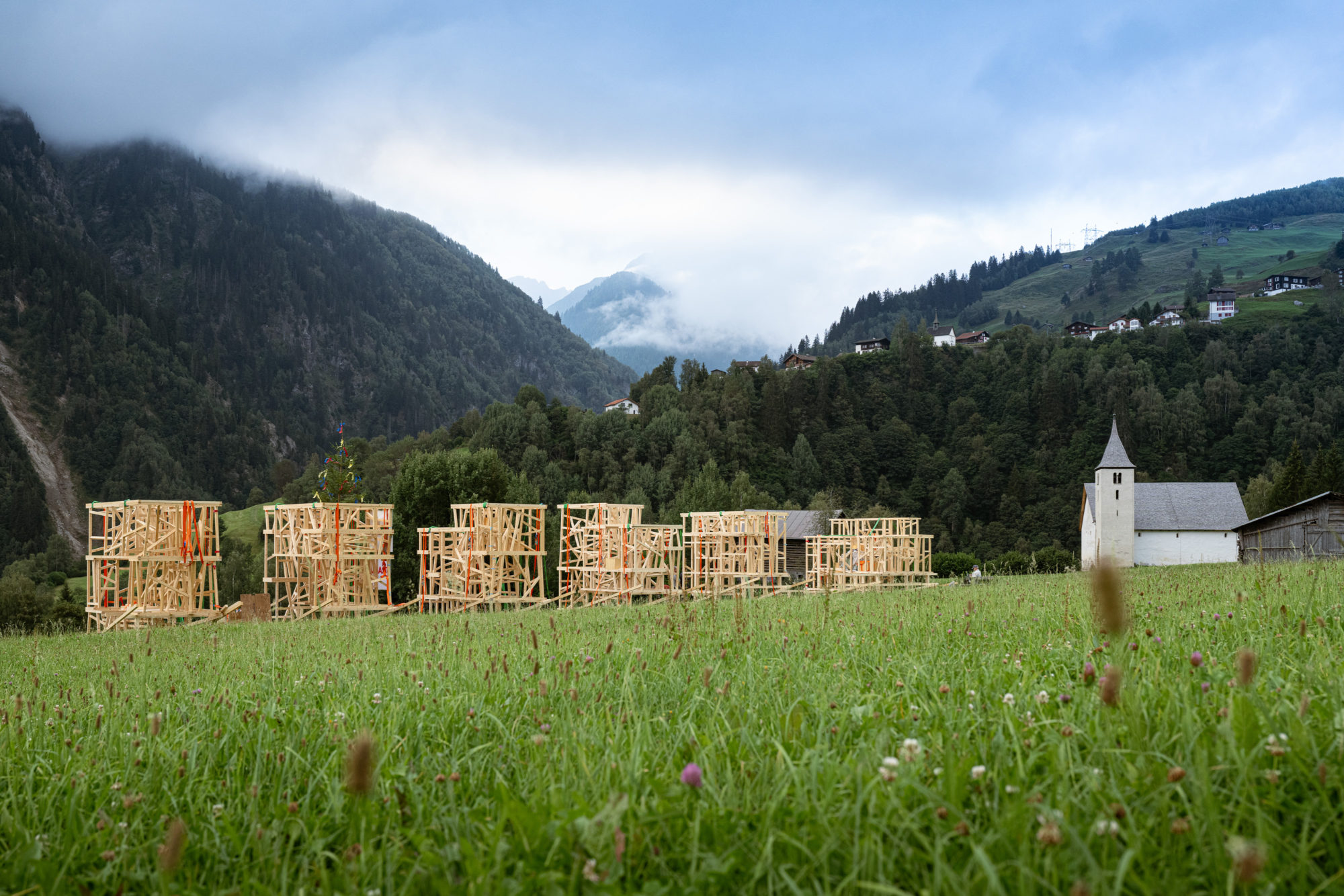
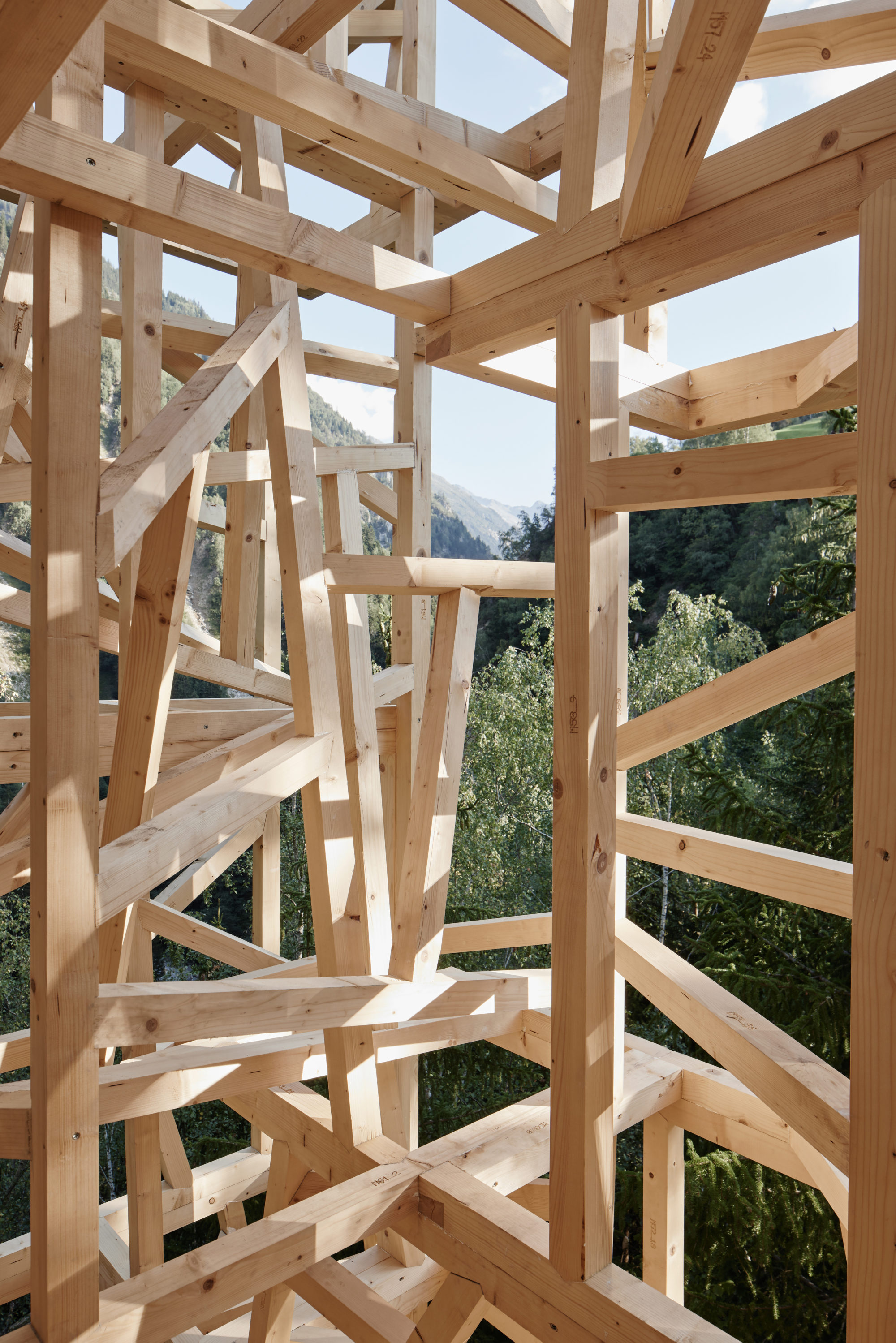
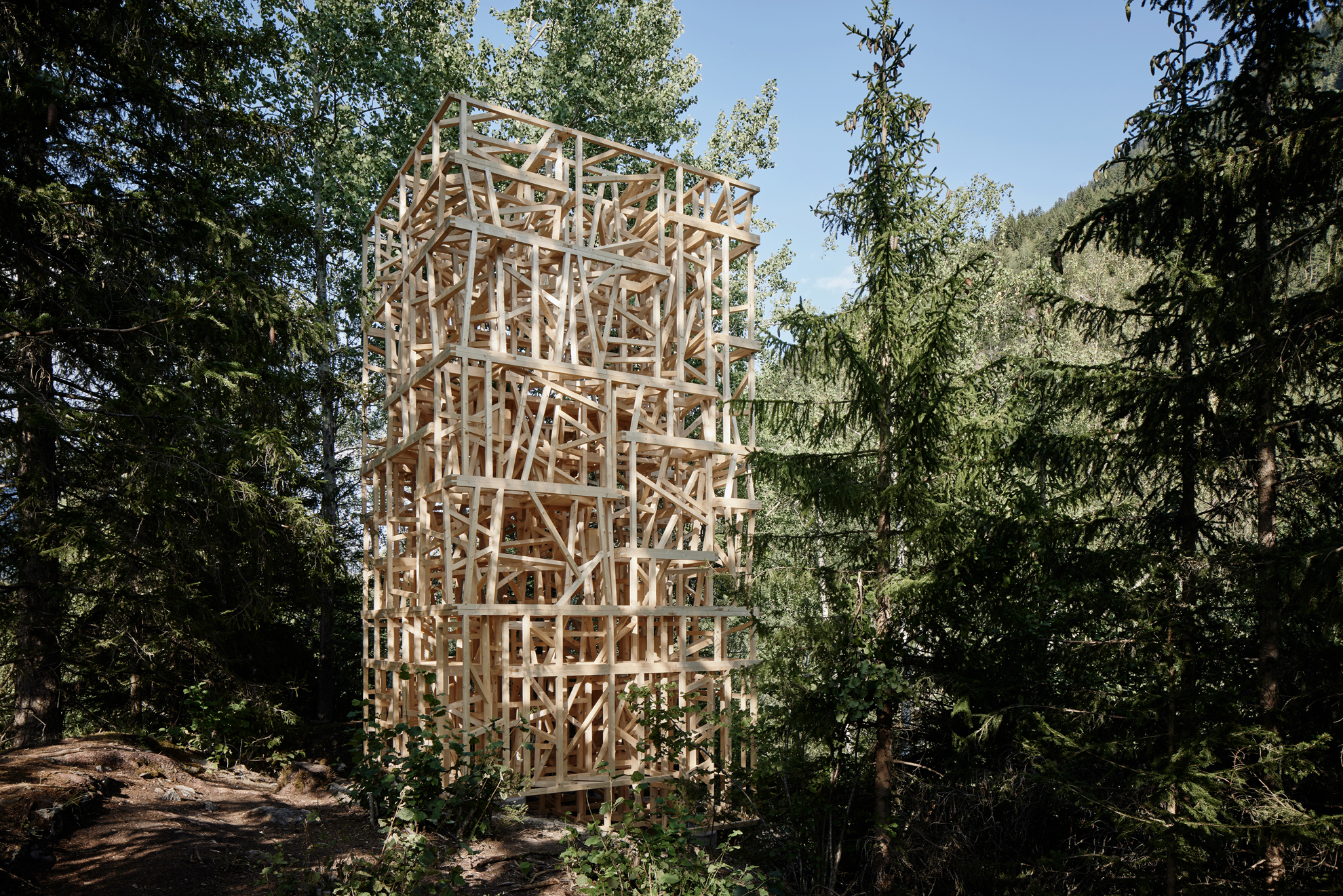
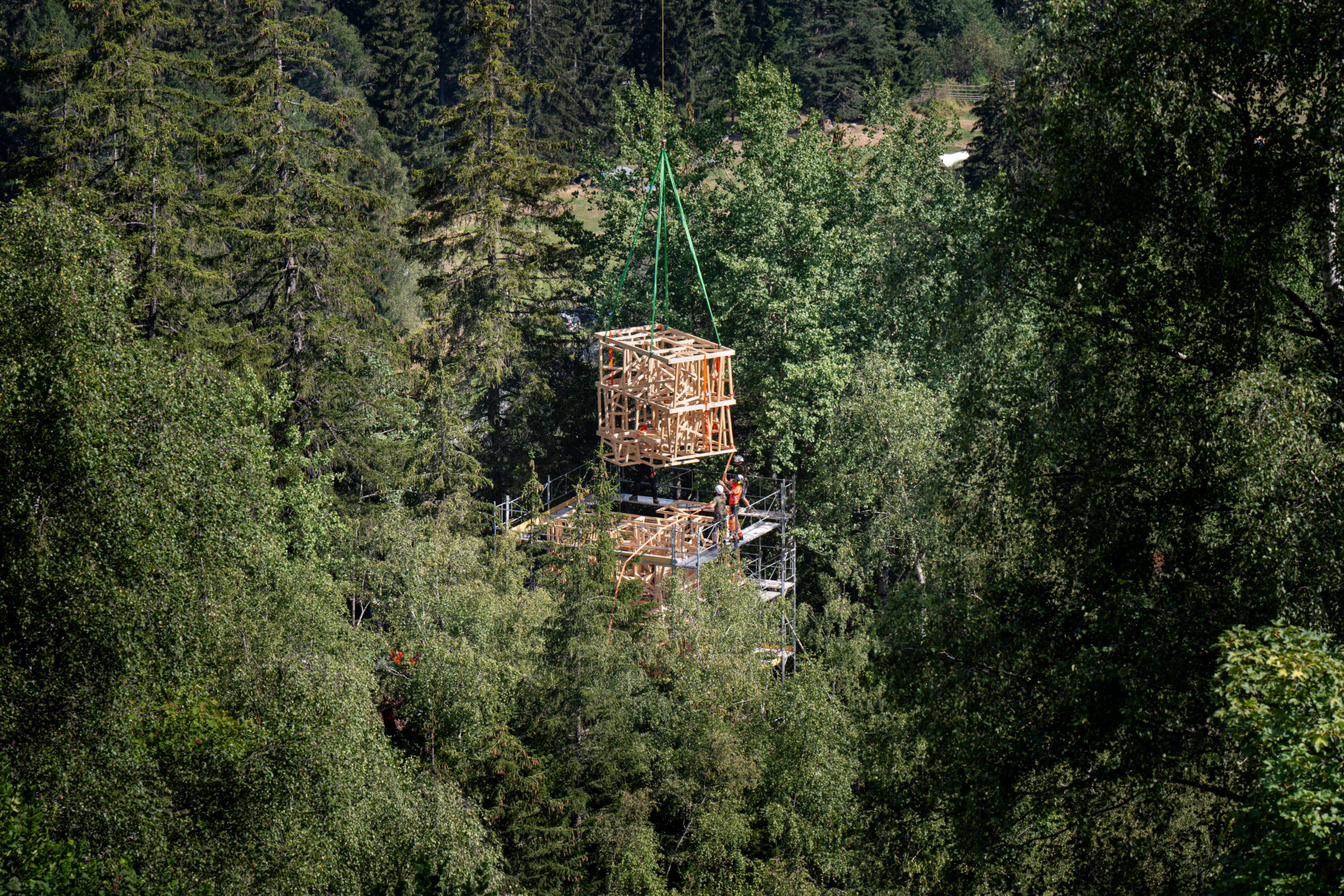
Built on the remains of Caschlatsch Castle, the tower of the same name is set in a demanding, hard-to-access alpine environment. Developed in partnership with ETH Zurich, this project aimed to explore new ways of building in timber, combining traditional craftsmanship with cutting-edge technologies. The structure, made up of more than 2,500 timber elements assembled in varying orientations, featured a complex geometry that still had to comply with constraints of prefabrication, transport, and rapid on-site assembly. The challenge was to turn this experimental approach into a concrete, stable, and well-controlled structure, while preserving its architectural intent and its function as a viewpoint for hikers.
Our response
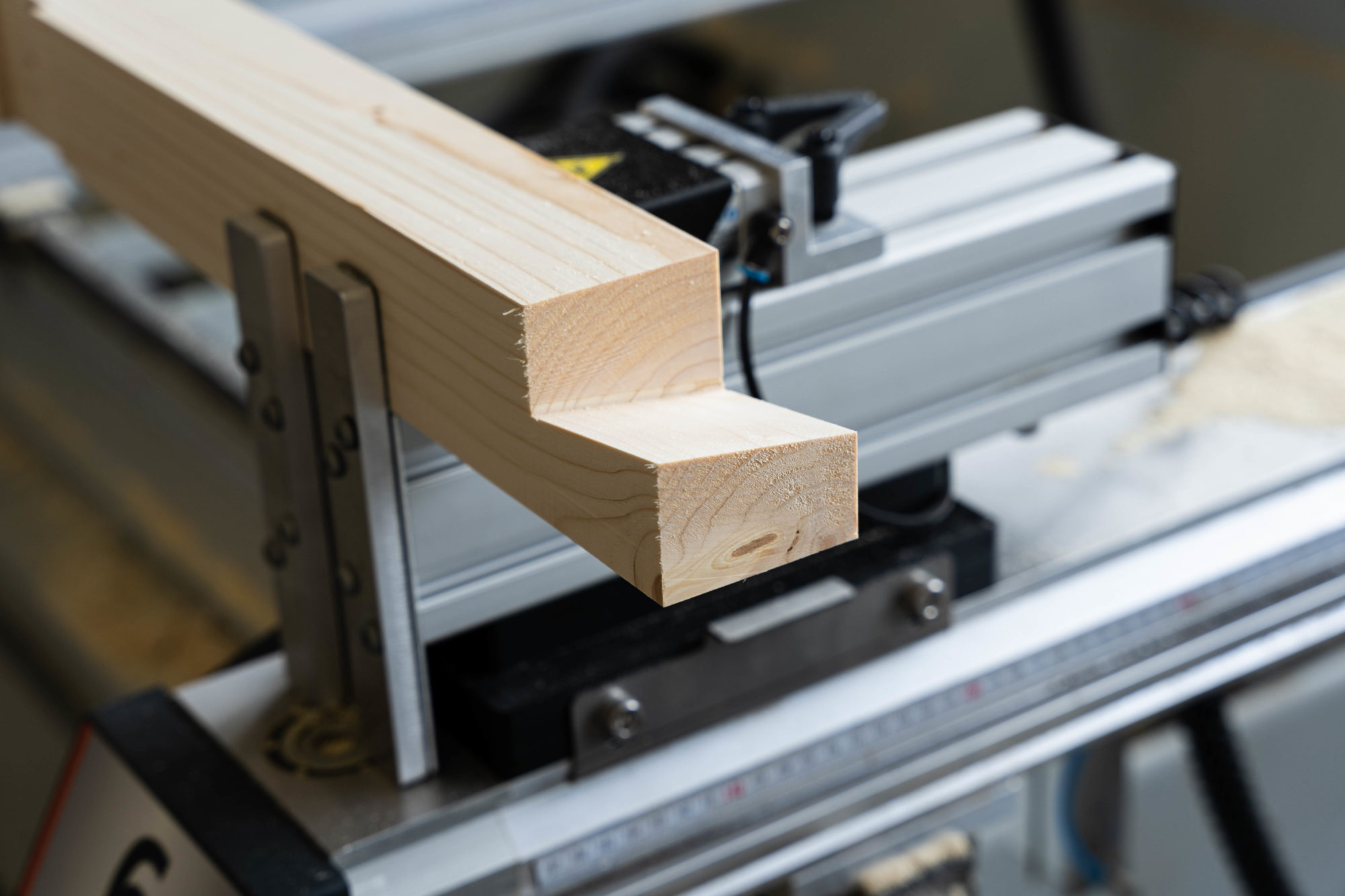
In the context of this partnership with ETH Zurich, our office leveraged its expertise to support the development and realisation of the project. Through several phases of analysis, preliminary design, and studies, we contributed to making a structure derived from an advanced design process feasible, ensuring its stability and optimising the use of timber as a material. Particular attention was given to integrating fabrication and assembly constraints from the earliest stages, enabling controlled production of the elements and efficient on-site assembly. The fabrication of the components was carried out in the laboratories of Gramazio Kohler Research at ETH Zurich, where humans and machines worked in close collaboration, notably through augmented and virtual reality technologies. This project pushed the boundaries of timber construction while exploring new forms of collaboration between humans and machines. It fully illustrates a contemporary engineering approach, where innovation, precision, and expertise come together to give rise to structures that are both high-performing and emblematic.
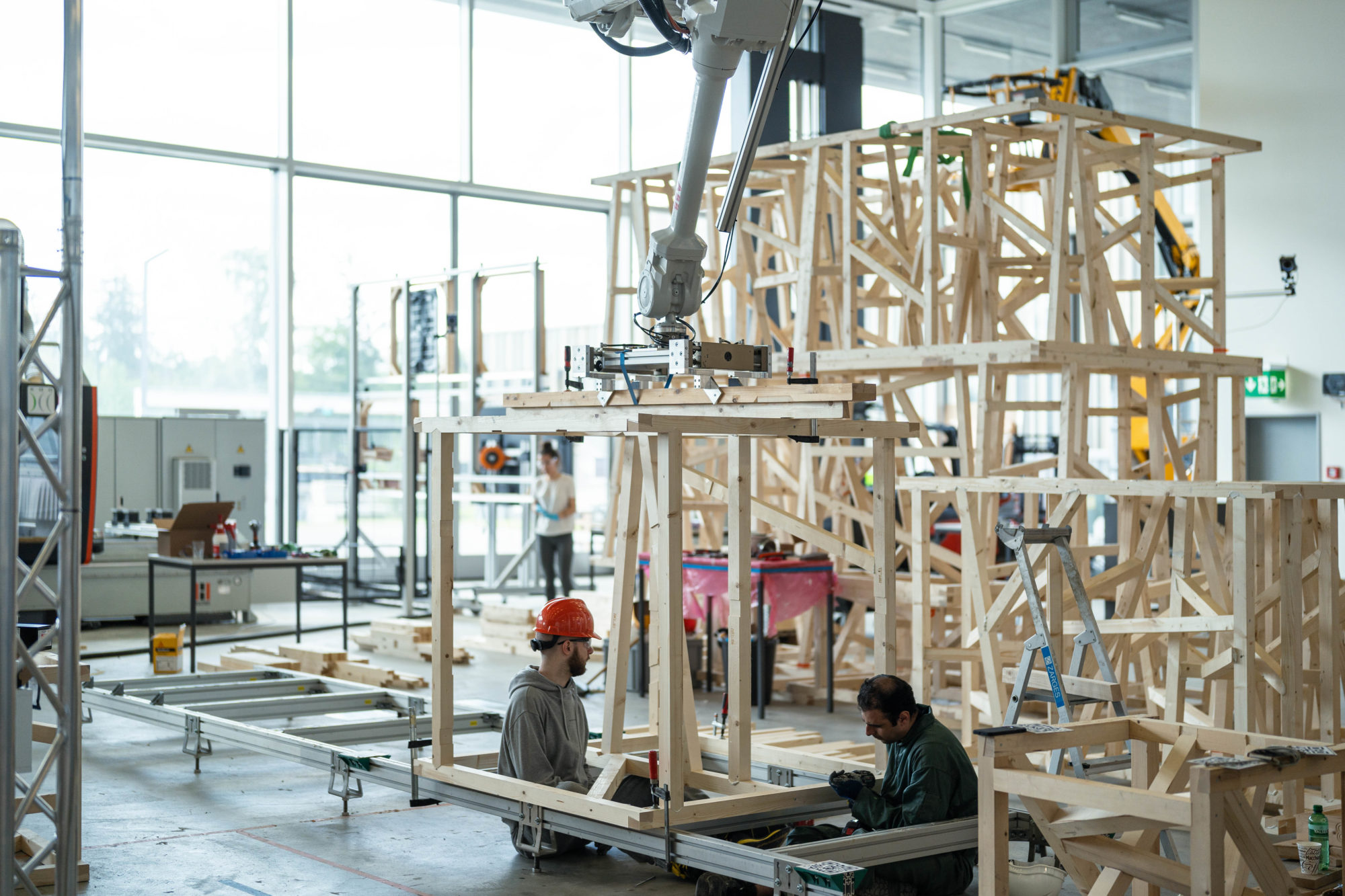
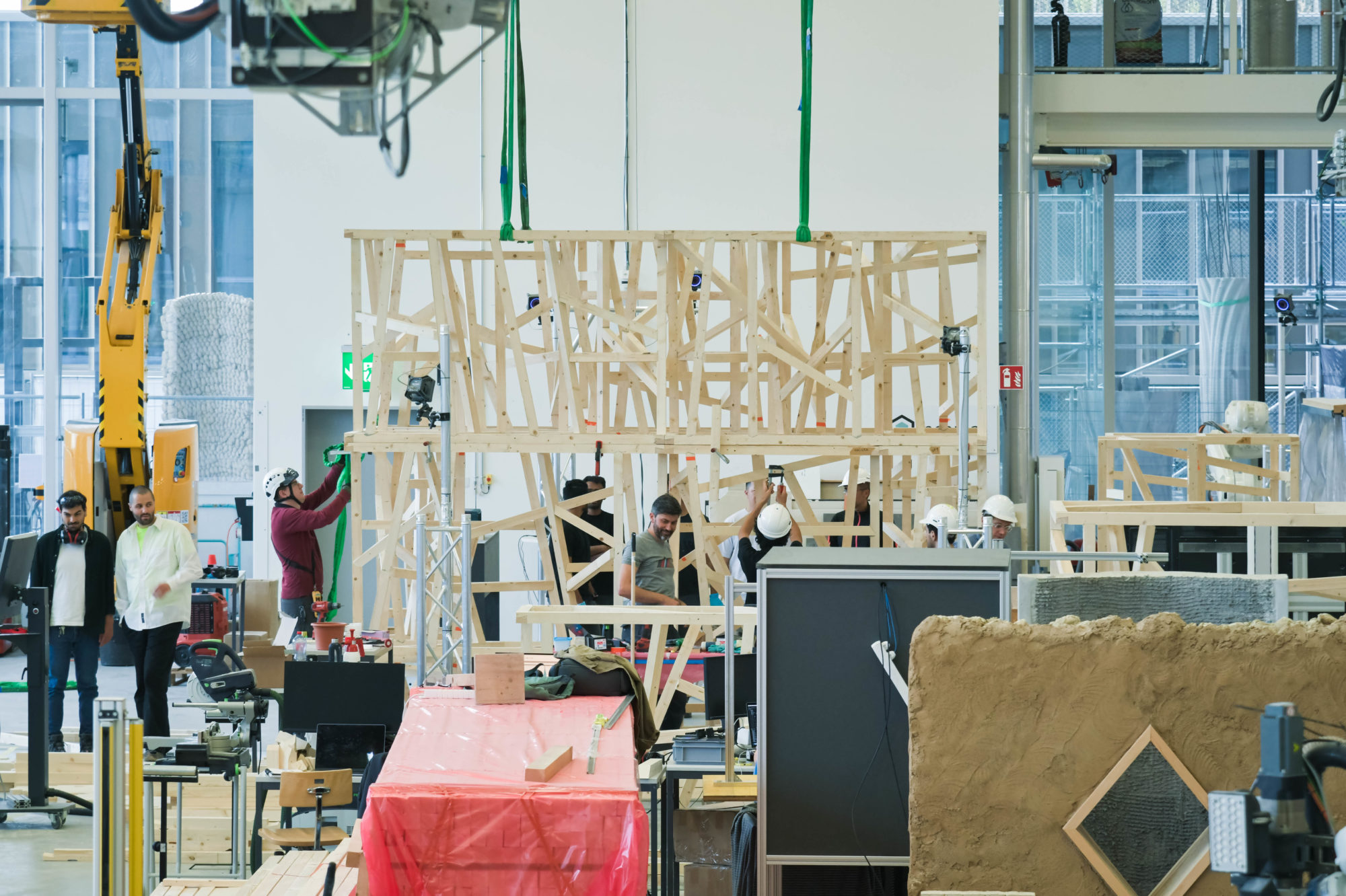
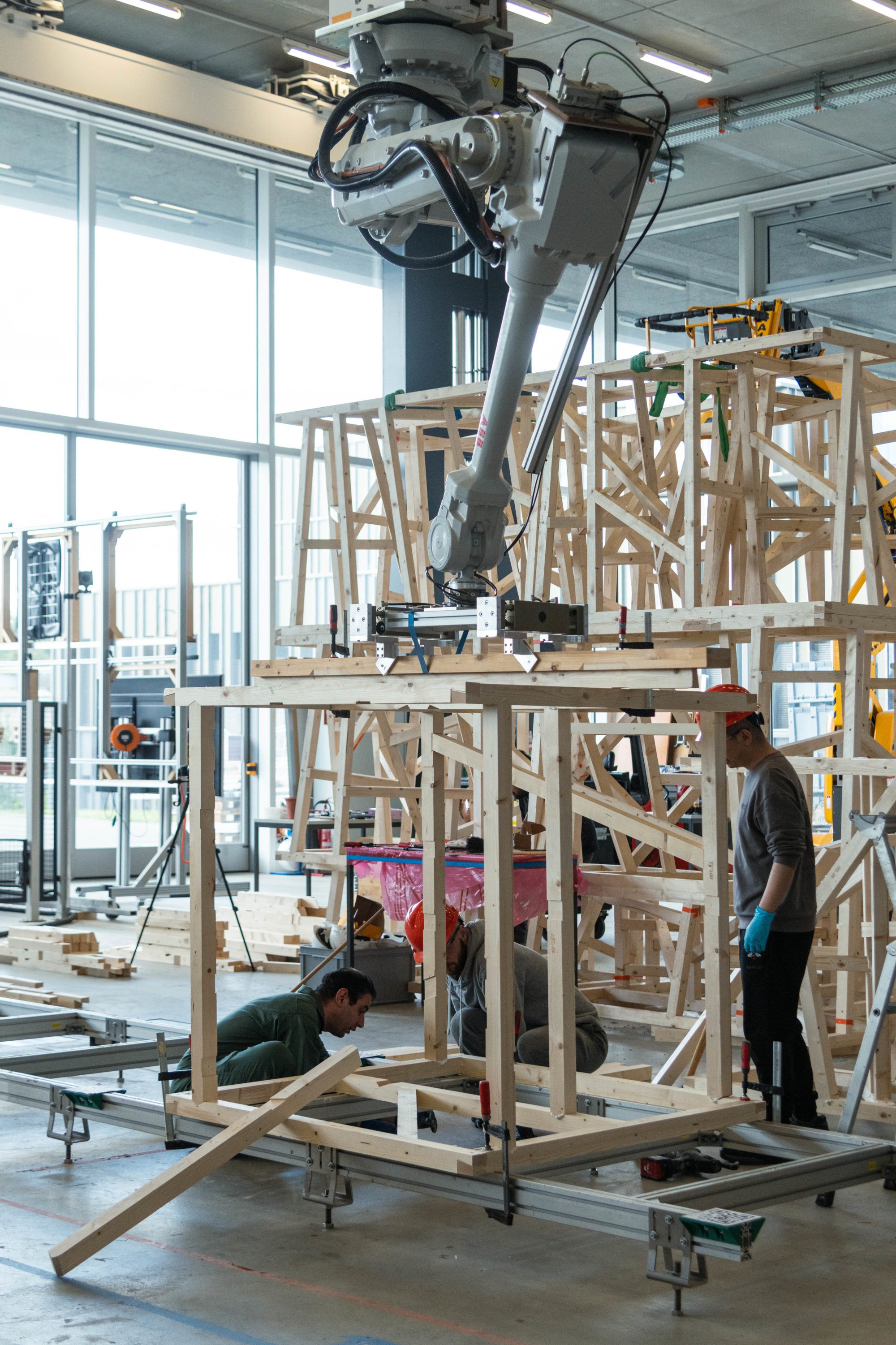
This project was carried out by Gramazio Kohler Research (ETH Zurich) in collaboration with students of the MAS ETH DFAB programme, and developed in partnership with dfdu AG, Studio UH Architects ETH SIA, and Nicolas Fehlmann Ingénieurs Conseils SA.
Photos: Michael Lyrenmann, Daniela Kienzler Fotografie, and Gramazio Kohler Research.